
Paulownia Timber
History Paulownia timber is a deciduous hardwood tree that was introduced in Australia. Paulownia is native to China and other parts of South East Asia. Historical writings from China, recorded as far back as 1049 BC, indicate that Paulownia trees were grown in plantations for the production of high quality timber. Traditional methods of tree cultivation and reforestation are not capable of keeping pace with the global demand for quality timber. Plantation forestry is obviously a key for acceptable sustained forest management worldwide. There are many myths and legends associated with the Paulownia tree as it holds great cultural value in many Asian countries. One such myth is the myth of the Phoenix. It is written in the works of Zhuang Tze: and without eating anything but bamboo fruit". The Chinese describe the Paulownia as the 4 sided tree, as it grows by the side of the house, the side of the river, the side of the paddock and the side of the road. In traditional cultures of Japan when a girl is born the family will often plant a Paulownia tree. When the girl marries the family will make a wedding chest from the Paulownia timber. top Characteristics The Paulownia tree has several distinguishing characteristics. They include:
Colour - consistently dries to a light honey to blond in colour. Grain - beautifully grained with a silky, satin appearance. Machine ability - low in resin and free of volatile oils, consquently it is easily worked and moulded. Joining - excellent adherence with glues - joints and hinges hold fast with screws - can be edge nailed without splitting. Finishing - accepts oil and spirit-based stains, lacquers, polishes and paints. Special Qualities - sound absorbent, rapid drying, gently on machinery, high strength to weight ratio. top Properties Studies have revealed a number of excellent features of the unusual Paulownia tree.
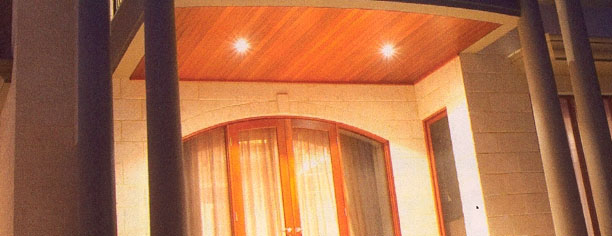
Workshop Attributes Nailing - Paulownia can be nailed by hand or air-actuated tool. Bearing in mind Paulownia is a relatively soft timber and therefore requires lower pressures to effect the desired penetration. Paulownia has a low tendency to split and is best used in conjunction with an adhesive. Screwing - Hand and power driven screws are suitable for use with Paulownia provided that adequate attention is given to the settings, so as not to overdrive the screw and reduce the holding ability of the thread. Good results can be obtained by observing these constraints particularly when using power - drive screws. The uniformity of grain in Paulownia gives more consistent results with minimal splitting. Gluing - Paulownia has been tested with five different brands of PVA, Cross-linked PVA and Urea Formaldehyde adhesives. Samples were prepared with each type of adhesive and Standard Separation tests conducted. Manufacturers recommendations were observed for each adhesive. 100% of the tested samples passed i.e. they did not separate along the glue line. AlI gave excellent results with minimal clamping time. Comparative tests between Paulownia and other hardwoods all showed the superiority of Paulownia timber with respect to fast cure time and uniform glue time. In all cases, using PVA adhesives on Paulownia halved the average time required for clamping. The time and cost saving in a board jointing production run is obvious. Sanding - Paulownia is easy to sand. A smooth finish can be achieved using minimal effort. Sanding materials generally last much longer with Paulownia than other hardwoods. A fine finish is achieved in much less time. There is a very low resin content in Paulownia, which results in longer sandpaper life and less clogging of belts and pad sanders. Machining - Paulownia is easy to saw, plane, mould, turn and carve. Low silica content results in longer life of all tool edges when working with Paulownia. AII facets of power machining of this timber should give good results. Staining and Finishing - Paulownia accepts paints and stains well. Oil and spirit stains are easily applied and give excellent results. A suitable sanding sealer is recommended before the application of clear finishes. Opaque finishes adhere readily. Light sanding between coats is recommended. Lining Boards - Paulownia boards are suitable for lining in all interior walls and ceiling situations including bathrooms and saunas. They can be fixed vertically, horizontally and diagonally. Lining boards can be supplied dressed so that they can be sealed with a moisture excluding coating. Lining boards should be supported at a maximum of 600mm spacings. In kitchen and bathroom areas it is recommended that Paulownia be sealed on both sides before fixing. Two to three coats of a polyurethane clear resin will give good protection of exposed surfaces. Doors and Windows - The lightness and relative strength of Paulownia makes it an ideal timber for exposed joinery such as external doors and windows. Tests have shown that Paulownia, in its natural state, has an outdoor durability rating comparable to Western Red Cedar. To preserve the natural appearance of Paulownia some form of proprietary coating should be applied. Exterior Cladding - The natural durability of Paulownia lends itself to exterior cladding applications either in its natural blond coloured state or colour matched to suit the environment. It is recommended that an appropriate water-repellent sealant be applied (minimum two coats) before fixing. Where heavy exposure may be encountered Paulownia responds well to light organic solvent (LOSP) type preservatives, increasing outdoor life by preventing the onset of decay. top Traditional Uses of Paulownia Traditional uses of Paulownia in many Asian countries include:
Modern Uses of Paulownia Due to the lightweight nature of Paulownia, it is also being recognized for modern applications including:
Forestry Requirements To achieve the maximum yield, Paulownia trees require sandy loam soils, plentiful water and high solar radiation during their growing period. Climate - Paulownia fortuneis a deciduous tree, indigenous to south and east China, that has been grown successfully around the world in plantations in a wide range of climatic zones. Naturally it occurs between latitudes 20 degrees and 30 degrees mostly in the warm temperate to tropical zones. The temperature range in its natural distribution is –10°C to 40°C with an annual rainfall of 500 to 1200mm mostly during spring and summer. The species is not tolerant of prolonged drought or waterlogged conditions. Because of the Mediterranean climate (wet winter/dry summer) in this region of Australia, the Paulownia tree must be irrigated if good growth rates are to be achieved. Paulownia is a sunlight loving tree (high light saturation point and low light compensation point). High solar radiation during summer in this region is advantageous for maintaining a high photosynthetic rate to sustain rapid growth. Soils - Paulownia has a deep root system with extensive lateral roots. This root system can forage for near-surface nutrients and explore sub-soils up to 5 metres for water. Like most trees, Paulownia performs best on deep, well-drained soils (pH 5 – 6) with good aeration. Paulownia grows well on sands to heavy loams where there are readily available nutrients. Water - The absence of summer rain at the Kiri Park property requires that over 500mm of rainfall above that of evaporation be provided from irrigation during the growing period. Paulownia requires between 30 to 40 litres of water per tree per day depending on age and weather conditions. Adequate water for the Kiri Park Projects is available from developed bores and a dam which was constructed to provide water security. The Department of Water has granted a Water Licence to the ECO Group allowing us to pump over 1.7 gigalitres per annum from the superficial aquifer. The water is of drinking quality, being low in iron and other ions. The low salt (NaCl) level is also important for good growth. |